

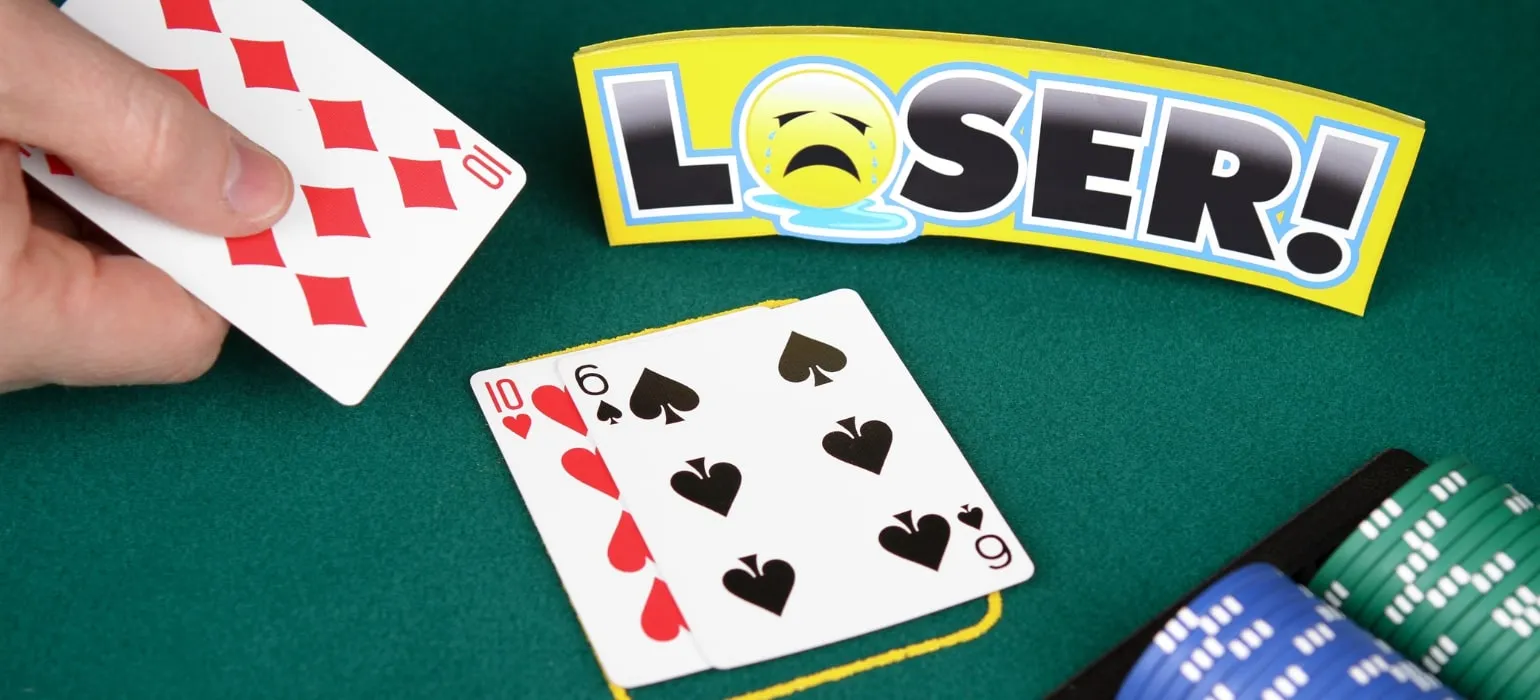
Every poker player faces losing streaks, whether they play casually or professionally. These downswings are a natural part of the game that can last anywhere from a few days to several months. Understanding how to manage them separates players who succeed long-term from those who quit or go broke.

The key to surviving a losing streak is combining smart bankroll management, honest game evaluation, and strong mental discipline. Many players make their situation worse by moving up in stakes to chase losses or playing too many tables when they should be focusing on fixing problems in their game.
This guide will help you understand why losing streaks happen, how they affect your mental state, and what specific steps you can take to recover. You’ll learn practical strategies for managing your bankroll, adjusting your play, and building the emotional strength needed to handle the ups and downs that every poker player experiences.
Understanding Poker Losing Streaks

Losing streaks affect every poker player at some point. The key difference between successful and struggling players lies in understanding what causes these downswings and how to identify whether you’re facing bad luck or making strategic errors.
Why Losing Streaks Happen
Poker combines skill with chance, which means you can’t win every hand or session. Even when you make the right decisions, you’ll still lose money sometimes.
A losing streak in poker happens when negative results pile up over multiple sessions. You might get dealt weak cards repeatedly, or your strong hands might get beaten by unlikely draws. These patterns feel frustrating but they’re built into the game’s structure.
The mathematical reality is simple: poker involves incomplete information and random card distribution. You can hold pocket Aces and still lose to a player who hits a lucky two-outer on the river. This doesn’t mean you played poorly.
Players often experience losing streaks that last days, weeks, or even months. The length depends on several factors including your skill level, the game format you play, and how much you play.
Role of Variance in Poker
Variance measures the gap between your expected results and actual results over a specific number of hands. Think of it as the swing factor in your bankroll.
Here’s a basic example: if you flip a coin 10 times, you expect 5 heads and 5 tails. But you might get 7 heads and 3 tails, or even 8 heads and 2 tails. That difference is variance.
Key aspects of variance include:
- Short-term results can deviate significantly from expectations
- Larger sample sizes produce more predictable outcomes
- Tournament poker has higher variance than cash games
- Your win rate affects how severely variance impacts you
The odds of losing a coin flip 10 times in a row sit at roughly 1 in 1,024. Unlikely, but possible. Poker works the same way. You can make profitable plays repeatedly and still lose because variance hasn’t evened out yet.
Online players handle variance better than live players because they play more hands per hour. More hands mean faster movement toward expected results.
Differences Between Bad Luck and Poor Play
Separating bad luck from mistakes is crucial for improvement. Bad luck means you made the right decision but got an unlucky outcome. Poor play means you made strategic errors regardless of the result.
Bad luck looks like this:
- Getting your money in with 96% equity and losing
- Running into better hands despite playing correctly
- Opponents hitting unlikely draws against you
Poor play looks like this:
- Calling large bets with weak draws
- Playing too many hands from bad positions
- Betting without a clear purpose or plan
You can identify poor play by reviewing your hands away from the table. Ask yourself if you’d make the same decision again knowing only the information you had at the time. If the answer is no, that’s a leak in your game, not variance.
Many players blame poker losing streaks entirely on bad luck. This stops them from finding and fixing real problems in their strategy. The truth is that most losing streaks combine some bad luck with some poor play.
Psychological Impact of Losing Streaks

Losing streaks trigger real physical and emotional responses in your body that can severely damage your poker performance. Your brain releases stress hormones, your muscles tense up, and your decision-making abilities weaken as frustration builds.
Emotional Reactions and Tilt
When you lose several hands or sessions in a row, your body experiences actual physical pain. Your stomach churns, your blood pressure changes, and thousands of muscles constrict. This isn’t abstract discomfort. It’s a real physiological response that your body interprets as danger.
Tilt occurs when these physical and emotional responses overwhelm your rational thinking. You feel an urgent need to make the pain stop by winning immediately. This pushes you to jump into another game too quickly or move up to higher stakes to recover losses faster.
Your brain’s reward system compounds these problems. Poker activates dopamine release, which drives pleasure and motivation. During a losing streak, your brain craves that dopamine hit from winning. This chemical urge combines with ego damage and financial stress to create an almost irresistible impulse to keep playing.
Effects on Confidence and Motivation
Losing streaks attack your confidence from multiple angles. You start questioning decisions that were actually correct. You forget that poker includes variance and that losses are normal statistical events, not personal failures.
Unrealistic expectations make these confidence issues worse. If you expect to win most sessions or tournaments, normal losing periods feel catastrophic. Your mind treats statistical noise as a moral flaw. You might start believing you’ve lost your edge or never had real skill to begin with.
This damaged confidence creates a dangerous cycle. Self-doubt leads to hesitant play or overly aggressive attempts to prove yourself. Both approaches lose money, which deepens your doubt further.
Recognizing the Signs of Tilt
You need to identify when tilt starts affecting your play. Physical symptoms appear first:
- Increased heart rate or blood pressure
- Tension in your shoulders and neck
- Upset stomach or nausea
- Inability to sit still
Mental and behavioral signs follow quickly. You feel impatient during normal gameplay. You can’t focus on opponents’ patterns. You start playing hands you’d normally fold or making bet sizes that don’t match the situation.
The most dangerous sign is when you feel you must keep playing to recover. If you can’t walk away from the computer, tilt has taken control. Financial pressure amplifies this trap. When your losses create real money stress, the urge to recover immediately becomes overwhelming and clouds your judgment completely.
Bankroll Management During Downswings
Proper bankroll management becomes even more critical when you’re in a losing streak. You need to protect your poker funds by setting clear limits, maintaining a separate poker budget, and adjusting how much you risk in each game.
Setting Loss Limits and Moving Down Stakes
You should establish clear financial boundaries before a losing streak damages your bankroll beyond repair. A good rule is to drop down in stakes when you lose 20-30% of your poker bankroll. If you normally play $1/$2 cash games with a $4,000 bankroll, move down to $0.50/$1 when your funds drop to $2,800-$3,200.
Set daily and weekly loss limits to prevent emotional decisions from emptying your account. For example, stop playing after losing three buy-ins in a single session. Many players ignore these limits and keep playing at stakes they can no longer afford.
Moving down feels bad, but it protects you from going broke. Lower stakes give you more room to handle variance while you work through the downswing. You can always move back up once your results improve and your bankroll rebuilds.
Maintaining a Healthy Poker Budget
Your poker money must stay completely separate from your personal finances. Never use rent money, bill payments, or emergency funds to play poker. Create a dedicated poker account that has no connection to your daily expenses.
Only deposit what you can afford to lose without affecting your lifestyle. For most recreational players, this means setting aside a small amount each month specifically for poker. Professional players typically keep 30-50 buy-ins for cash games and 100-300 buy-ins for tournaments.
Track every session in a spreadsheet or poker tracking app. Write down the date, game type, stakes, and results. This helps you spot losing patterns and shows you when a normal variance becomes a real downswing that needs attention.
Adjusting Bet Sizing Under Pressure
Reduce your bet sizing during losing streaks to limit risk without completely changing your strategy. If you normally buy in for 100 big blinds in cash games, consider buying in for 60-80 big blinds instead. This smaller amount still lets you play poker while protecting more of your bankroll.
Avoid the temptation to make bigger bets to win back losses quickly. This approach almost always backfires and speeds up how fast you lose money. Stick to your normal betting patterns based on pot odds and hand strength.
Take breaks between sessions when you notice yourself making larger bets out of frustration. Even a 15-minute walk away from the table helps you reset mentally. Regular breaks prevent you from throwing good money after bad during emotional moments.
Adjusting Your Poker Strategy
When losses pile up, your strategy needs a careful review. Finding weaknesses in your game and adapting to different poker formats can stop the bleeding and get you back on track.
Identifying and Fixing Leaks
Your losing streak might stem from specific patterns in your play that opponents exploit. Tracking software reveals these leaks through concrete data about your decisions at different stages of each hand.
Start by reviewing hands where you lost significant chips. Look for repeated mistakes like calling too many raises from early position or overvaluing weak pairs. These patterns cost you money over time, even if they don’t seem obvious during play.
Focus on these common problem areas:
- Preflop decisions: Are you playing too many hands from bad positions?
- Bet sizing: Do your bets give opponents correct odds to call?
- Bluff frequency: Are you bluffing too often or not enough?
- River play: Do you make crying calls with marginal hands?
Get feedback from better players who can spot issues you miss. They notice tendencies you’ve developed without realizing it. Online forums and study groups provide free analysis if you can’t afford coaching.
Refining Your Approach to Different Game Types
Cash games and tournaments require different strategies, yet many players use the same approach for both. This mistake amplifies during losing streaks when you need every edge.
In cash games, you can reload and play more conservatively. Your poker strategy should focus on making thin value bets and folding marginal hands. Stack sizes stay relatively constant, so you can wait for strong spots.
Tournaments demand more aggression as blinds increase. You must accumulate chips or risk getting blinded out. Shorter stacks mean you need to take calculated risks with decent hands rather than waiting for premium cards.
Multi-table tournaments need different adjustments than sit-and-gos. Study the specific format where you’re losing most. Your win rate in one format doesn’t guarantee success in another.
Tools and Resources for Managing Streaks
Tracking software helps you identify patterns in your play, poker forums connect you with experienced players who understand your struggles, and direct feedback from skilled players reveals blind spots you might miss on your own.
Benefiting from Tracking Software
Tracking software records every hand you play and turns that data into useful statistics. Programs like PokerTracker and Hold’em Manager show you exactly where you’re winning and losing money.
These tools track your win rate, aggression levels, and position-based stats. You can see if you’re calling too often from early position or if you’re folding too much on the river. The software also shows when you’re making emotional decisions instead of strategic ones.
During a losing streak, tracking software helps you figure out if you’re actually playing poorly or just experiencing bad luck. The numbers don’t lie. If your stats look normal but you’re still losing, that’s variance. If your aggression dropped or your fold percentage jumped, you’ve found real problems to fix.
Most tracking software includes hand replay features. You can review difficult hands and see where you might have made better choices. This turns your losses into learning opportunities instead of just frustrating experiences.
Leveraging Poker Forums and Communities
Poker forums like TwoPlusTwo and Reddit’s poker communities give you access to thousands of players dealing with the same challenges. You can post hands for review, ask questions about strategy, and learn from others’ experiences.
These communities help you realize that losing streaks happen to everyone. Reading about other players’ downswings reminds you that variance affects all skill levels. This perspective keeps you from panicking or making drastic changes to your game.
Forums also provide specific advice for your situation. Post a hand history and you’ll get multiple viewpoints on what went wrong. Different players see different things, which gives you a complete picture of your mistakes.
The Value of Seeking Feedback
Getting direct feedback from better players speeds up your improvement during tough stretches. A coach or mentor spots mistakes you can’t see yourself because they’re looking at your play without emotional attachment.
You can hire a professional coach for personalized sessions or find a study partner at your skill level. Many players offer free hand reviews on forums or Discord servers. Even watching training videos counts as feedback because you’re learning how skilled players think through decisions.
Ask specific questions when you seek feedback. Instead of “What did I do wrong?” ask “Should I have bet bigger on the turn?” Specific questions get useful answers that actually improve your game.
Building Long-Term Success and Emotional Discipline
Your ability to manage emotions and maintain perspective during a losing streak determines your success as a poker player. Consistent improvement and professional guidance matter more than any single session or week of results.
Focusing on Long-Term Success Over Short-Term Results
Poker results become meaningful only over thousands of hands. A single session tells you almost nothing about your skill level. Even winning players lose 30-40% of their sessions.
Track your performance over months, not days. Keep a detailed journal that records your win rate, key decisions, and mental state. This data reveals your actual progress and helps you identify patterns.
Set process goals instead of outcome goals. Focus on making correct decisions, studying specific aspects of your game, and playing your A-game for a set number of hours. You control these factors, while short-term results depend heavily on variance.
Top players experience losing streaks that last weeks or even months. Your job is to make optimal plays regardless of results. The money follows good decisions over time.
The Importance of Taking Breaks
Step away from poker when you notice emotional frustration or mental fatigue. Playing while tilted costs you money and reinforces bad habits.
Set clear break triggers before you play. Walk away after losing three buy-ins in a session or when you catch yourself making angry decisions. A 24-hour break often provides enough distance to reset your mindset.
Use break time for activities that restore mental energy. Exercise improves decision-making and reduces stress. Hobbies unrelated to poker give your mind necessary rest from strategic thinking.
Short breaks during sessions also help. Stand up, walk around, and take deep breaths between hands or during tournament breaks. These small pauses prevent emotional buildup.
Working with a Poker Coach
A poker coach identifies leaks in your game that you cannot see yourself. They review your hand histories, spot recurring mistakes, and provide structured improvement plans.
Coaches help you separate variance from errors during losing streaks. They confirm when you played correctly despite bad results and point out genuine strategic problems that need fixing.
Look for coaches who specialize in your game format and stake level. Check their credentials, student reviews, and teaching style before committing. Many coaches offer trial sessions to ensure compatibility.
Budget for regular coaching sessions, typically twice per month. Between sessions, complete assigned homework and review recorded lessons. The investment pays for itself through improved win rates and faster skill development.
Frequently Asked Questions
Losing streaks raise important questions about strategy, mental health, and game management. Understanding these common concerns helps you make better decisions during difficult stretches at the tables.
What are effective strategies to manage a losing streak in poker?
You need to accept that variance is a normal part of poker, even when you play well. Focus on making optimal decisions rather than obsessing over short-term results.
Review your hand histories to identify whether losses come from bad luck or mistakes in your play. Consider dropping down in stakes temporarily to reduce financial pressure and rebuild confidence.
Practice emotional discipline through mindfulness techniques like deep breathing or meditation. Take regular breaks to prevent tilt and maintain clear thinking at the tables.
How long can a typical poker losing streak last?
Most losing streaks last only a few sessions, but some can extend for weeks or even months. The length depends on variance, game conditions, and whether you’re making strategic errors.
Professional players can experience downswings that last 100,000 hands or more in cash games. Tournament players often face longer streaks due to the higher variance in tournament play.
Tracking your results over thousands of hands gives you a better picture of actual performance versus temporary variance.
Are there any common psychological impacts of repeated losses in poker?
Repeated losses often lead to tilt, which is emotional frustration that causes poor decision-making. You might start making desperate plays or deviating from your proven strategy.
Players frequently experience reduced confidence and increased anxiety during losing streaks. Some develop a fear of continuing to play or start second-guessing their abilities.
These emotional responses can create a negative cycle where psychological stress leads to worse play, which causes more losses. Recognizing these patterns early helps you address them before they damage your game further.
What steps can players take to analyze and improve their gameplay during a losing streak?
Start by reviewing your hand histories to look for patterns in your play. Use tracking software to identify specific weaknesses like over-aggressive betting or poor position play.
Discuss hands with experienced players in poker forums or communities. A fresh perspective often reveals mistakes you might have overlooked.
Study poker instructional content and adjust your strategy based on current game dynamics. Consider hiring a coach who can provide personalized feedback on your play.
When should a poker player consider taking a break from the game?
You should step away when you notice yourself making emotional decisions instead of strategic ones. If you’re chasing losses by playing higher stakes or forcing action, you need a break immediately.
Take time off when poker stops being enjoyable and becomes a source of stress or anxiety. Set a specific cool-off period, whether that’s a day, a week, or longer.
Use breaks to engage in other activities that clear your mind and restore perspective. Return only when you feel mentally prepared to play your best game.
How do bankroll management techniques change during a losing streak?
You should maintain at least 20-30 buy-ins for cash games and 100 buy-ins for tournaments. During a losing streak, consider moving down in stakes to protect your bankroll from further damage.
Never move up in stakes to try recovering losses quickly. This approach almost always leads to bigger losses and compounds the problem.
Stick to your predetermined bankroll limits regardless of how you feel emotionally. Adjust your game selection to play at stakes where you have adequate cushion for continued variance.