


Horse betting offers a unique way to enjoy the sport of kings while potentially winning money on your predictions. Unlike traditional sports betting, horse racing uses a parimutuel wagering system where all bets are pooled together and payouts depend on how much money is bet on each horse. This system makes horse racing betting different from other types of gambling you might be familiar with.

You can start betting on horse races through specialized online racebook apps like TwinSpires, FanDuel Racing, and 1/ST BET, which operate separately from regular sportsbooks in most states. These platforms let you place bets on races at tracks across the country and around the world from your phone or computer. The betting options range from simple win bets to complex exotic wagers that predict multiple horses finishing in exact order.
Learning how to bet on horses requires understanding the different bet types, reading odds, and knowing which platforms offer the best bonuses and features. This guide walks you through everything from basic betting mechanics to advanced strategies, helping you make informed decisions whether you’re placing your first bet or looking to improve your horse racing handicapping skills.
How Horse Betting Works
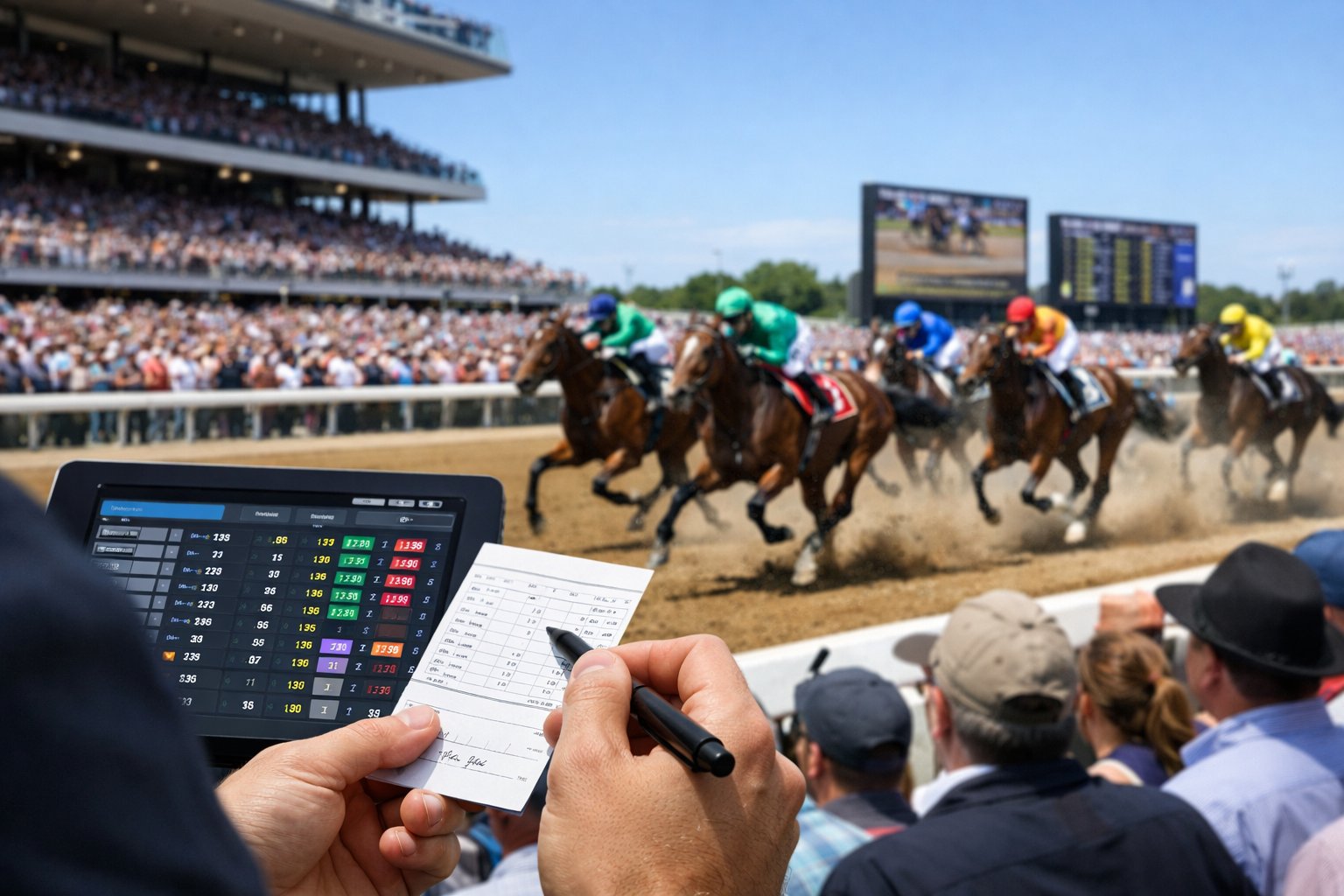
Horse betting operates through two main systems that determine how your wagers are priced and paid out. The odds you see reflect either a fixed price you lock in or a share of a pooled betting fund that changes until the race starts.
Understanding Horse Racing Odds
Horse racing odds tell you two things: how much you can win and what the betting market thinks about each horse’s chances. Odds appear in different formats depending on where you bet, but they all show the same information.
Decimal odds are common in Europe and online platforms. An odds of 4.00 means you get $4 back for every $1 wagered, including your original stake. Fractional odds like 3/1 are traditional in the UK and mean you win $3 for every $1 bet, plus your stake back.
American odds use positive and negative numbers. +300 means you win $300 on a $100 bet. -200 means you need to bet $200 to win $100.
Racing odds convert to implied probability. A horse at 5.00 decimal odds has a 20% implied chance of winning. Here’s a quick reference:
| Decimal Odds | Implied Probability |
|---|---|
| 2.00 | 50% |
| 4.00 | 25% |
| 5.00 | 20% |
| 10.00 | 10% |
Odds change based on betting activity, track conditions, and late information from racing stables. A horse that opens at 8.00 might drop to 5.00 if large amounts of money come in.
Parimutuel Wagering Explained
Parimutuel betting pools all wagers together and divides the total among winners after the track takes its cut. This is the standard system at most US racetracks and in countries like France and Japan.
When you place a parimutuel bet, you don’t know your exact payout until betting closes. The final odds depend on how much money goes into the pool and how it’s distributed across all horses. If a horse attracts heavy betting, its odds drop. If few people bet on a horse, its odds rise.
The track or operator deducts a percentage from the pool before paying winners. This takeout rate typically ranges from 15% to 25% depending on the bet type and jurisdiction. The remaining pool gets divided among all winning tickets proportionally.
For example, if $10,000 is bet on a race with a 20% takeout, $8,000 goes into the payout pool. If $2,000 was bet on the winning horse, each dollar on that horse receives about $4 back.
Fixed Odds vs. Parimutuel Betting
Fixed odds betting locks in your price when you place your wager. If you bet on a horse at 6.00 and the odds later drop to 4.00, you still get paid at 6.00 if the horse wins. This system dominates in the UK and with online bookmakers.
Parimutuel betting means your payout depends on the final pool division. You might bet early when a horse shows 8.00, but if heavy late betting comes in, your actual payout could be based on 5.00 instead.
Fixed odds give you certainty and let you calculate exact returns before the race. You can compare prices across bookmakers and choose the best value. Parimutuel betting offers no price guarantee but can deliver bigger payouts on lightly bet horses.
Most online platforms now offer both systems. You can choose fixed odds for control or parimutuel pools for potential value on overlooked horses. Understanding which system you’re using changes how you should time your horse racing wagers and evaluate your risk.
Types of Horse Racing Bets
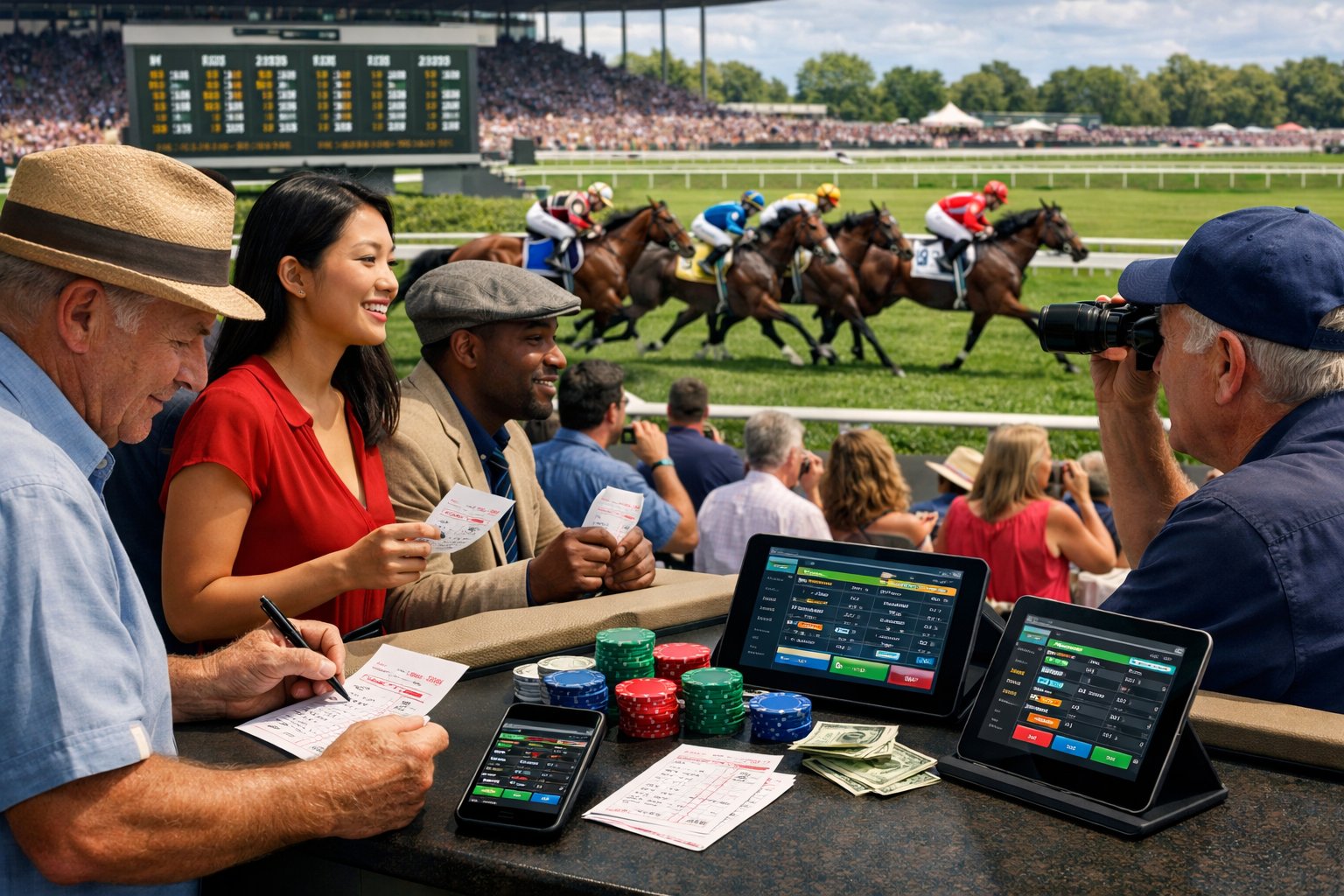
Horse racing offers multiple betting options that range from simple single-race wagers to complex multi-race combinations. Each bet type carries different risk levels and potential payouts based on how many horses you select and how precisely you predict the outcome.
Win, Place, and Show
A win bet is the most basic wager in horse racing. You pick one horse, and it must finish first for you to collect. The payout depends on the odds at post time.
A place bet means your horse must finish either first or second. The payout is lower than a win bet because you have two ways to win instead of one.
A show bet requires your horse to finish in the top three positions. This gives you the best chance of winning, but the payout is the smallest of the three options. These three bet types work well for beginners because they focus on one horse and have clear winning conditions.
Exacta, Trifecta, and Superfecta
An exacta requires you to pick the first two finishers in exact order. You must correctly predict which horse wins and which horse places second. The payout increases significantly compared to basic bets.
A trifecta demands that you select the top three finishers in exact order. You need to predict first, second, and third place correctly. This bet offers higher payouts because the difficulty increases with each additional position.
A superfecta is the most challenging of these bets. You must pick the first four finishers in exact order. The odds of winning drop considerably, but successful superfecta bets can pay out thousands of dollars on small wagers. Many tracks allow you to “box” these bets, which covers all possible order combinations of your selected horses for a higher total cost.
Daily Double and Exotic Bets
A daily double connects two consecutive races. You must pick the winner of both races to collect. Your stake and winnings from the first race carry over to the second, similar to how a parlay works.
Exotic bets include various complex wagers beyond basic win-place-show options. These include pick-3, pick-4, pick-5, and pick-6 bets where you select winners across multiple consecutive races. A pick-6 requires you to choose the winner of six straight races, which creates massive potential payouts but extremely low winning odds.
Other exotic options include quinella bets (picking two horses to finish first and second in any order) and combination forecasts. These bet types appeal to experienced bettors who study racing forms and track conditions closely.
Parlays and Future Wager Pools
Parlays link multiple selections together into one bet. All your picks must win for you to collect, but the potential payout grows with each added selection. A four-horse parlay means all four horses must win their respective races.
Future wager pools let you bet on major races weeks or months before race day. You can place bets on events like the Kentucky Derby or Breeders’ Cup before final entries are confirmed. These pools typically offer higher odds because of the uncertainty involved.
Futures betting requires patience and research into horse development, trainer patterns, and seasonal conditions. The odds you lock in at bet placement remain fixed, which can work in your favor if your horse’s odds shorten closer to race day.
Best Online Horse Betting Sites in 2026
Several trusted platforms now offer online horse racing betting with strong features and protections. The top sites provide easy-to-use interfaces, mobile apps, and legal operations in states where horse betting is allowed.
Top-Rated Horse Betting Platforms
BetUS leads the market with a large racebook and a 125% sign-up bonus plus up to 30 risk-free bets. You can access thousands of races through their platform.
Bovada offers the #What’sYaWager feature for personalized bets and a $750 Bitcoin Sports Welcome Bonus. Their sportsbook includes selective live streaming of races.
MyBookie provides competitive odds with 8% racebook rebates and special perks for VIP+ members. Reload bonuses and odds boosts are available regularly.
BetOnline covers both North American and international race tracks in their online sportsbook. They offer early odds and many wager types.
BetNow, SportsBetting, EveryGame, and XBet round out the top platforms. XBet gives new users up to $500 on their first deposit plus a $10 casino chip. Each site brings different strengths to online horse betting.
Comparing Features and User Experience
A user-friendly interface is standard across top horse racing betting sites. Most platforms now include mobile betting apps for iOS and Android devices.
Mobile features let you place bets and watch races from anywhere. Horse racing apps provide real-time updates on odds changes and race results. The mobile betting app experience has improved greatly with better streaming quality and faster loading times.
Racebook options vary by site. Some platforms offer prop bets, future wagers, and exotic bet types like exactas and trifectas. Customer support is available through live chat, email, and phone on most sites.
Payment processing typically starts with a $10 minimum deposit. You can use credit cards, cryptocurrency, PayNearMe, ACH transfers, and e-wallets like AstroPay. Withdrawal times range from 12 hours to several days depending on your method.
Security and Legal Compliance
Online horse racing is legal in 41 states, with 30 states allowing online wagering specifically. You must check if your state permits online horse betting before signing up.
Regulated horse racing betting sites protect your financial transactions and personal data. Licensed platforms follow state gaming laws and use encryption to secure your information.
You should only use sites that operate legally in your state. Regulated platforms guarantee your bets are valid and your winnings will be paid. Most sites require identity verification when you create an account.
Responsible gambling tools are built into legal horse betting sites. You can set deposit limits, take breaks from betting, and access problem gambling resources. These protections only exist on licensed platforms that follow state regulations.
Bonuses, Promotions, and Banking Options
Horse betting sites compete for your business by offering deposit matches, cashback programs, and various promotional incentives. Understanding these offers and how to fund your account helps you maximize value and manage your betting activity effectively.
Welcome Bonuses and Sign-Up Offers
Most horse betting platforms greet new customers with deposit match bonuses or first bet refunds. A deposit match bonus gives you extra funds based on your initial deposit amount. For example, a 100% match on a $100 deposit adds another $100 to your account.
Some sites offer 50% matches up to $300, while others provide smaller amounts like $150 in wagering credits. You typically need to register with a specific promo code and meet wagering requirements within 30 days.
First bet refunds work differently. These promotions return your stake as site credit if your initial wager loses. However, deposit match bonuses usually provide better value because they give you funds upfront that you can use more flexibly.
Reload Bonuses, Rebates, and Free Bets
Ongoing promotions reward loyal customers beyond the initial sign-up offer. Cashback rebates are particularly valuable in horse racing because they apply to your total betting volume regardless of wins or losses.
Rebate programs typically return 2% to 5% of your wagers as cash. Higher betting volumes qualify you for better rebate percentages. You receive these payments daily or weekly without complex redemption requirements.
Close call refunds represent another common promotion. These offers refund your WIN bets when your horse finishes second or third in specific races. Some sites also provide odds boosts on selected races or refund exotic bets that miss by one leg.
Free past performances save you money on research materials when you place at least one bet on the race.
Secure Payment Methods and Withdrawals
Horse betting sites accept credit cards, debit cards, PayPal, and bank transfers for deposits. Many platforms charge a $5 fee for card and PayPal deposits, though some waive this fee on specific days or during major racing events.
Bank transfers and ACH deposits usually process fee-free but take longer to clear. Most sites process deposits instantly for card payments, allowing you to bet immediately after funding your account.
Withdrawals typically go through the same method you used to deposit. Processing times range from 24 hours for e-wallets to 3-5 business days for bank transfers. Look for fee-free deposit promotions to reduce your transaction costs over time.
How to Start Betting Online
Getting started with online horse race betting requires three main steps: setting up an account with a trusted platform, funding that account, and learning to navigate the betting interface.
Creating Your Account
Choose from the best online horse betting sites like TwinSpires, FanDuel Racing, or other licensed platforms. You’ll need to provide basic information including your name, address, date of birth, and Social Security number. The site uses this information to verify your identity and confirm you’re of legal betting age in your state.
Most platforms complete the verification process within 24 hours. You may need to upload a photo ID or other documents to prove your identity. Keep your login credentials secure and enable two-factor authentication if available.
Making Your First Deposit
Online horse betting sites accept multiple payment methods:
- Credit and debit cards
- Bank transfers
- PayPal and other e-wallets
- Prepaid cards
Minimum deposits typically range from $10 to $20. Many sites offer welcome bonuses for new users, but read the terms carefully to understand wagering requirements. Your funds usually appear in your account immediately with card payments, while bank transfers may take 1-3 business days.
Set a budget before you deposit. Only bet money you can afford to lose.
Placing Bets and Navigating the Platform
Browse the day’s race schedule on the home screen. Click on a specific race to view the horses, odds, and betting options. The interface shows win, place, and show bets along with exotic wagers like exactas and trifectas.
To place a bet, select your horse number, choose your bet type, and enter your wager amount. The screen displays your potential payout before you confirm. Review all details carefully since most sites don’t allow bet cancellations once submitted.
Watch live race streams directly on the platform. Your account updates automatically when races finish, showing wins and losses in real time.
Betting Strategies and Handicapping
Success in horse betting requires analyzing data, managing money properly, and understanding how conditions affect race outcomes. Betting strategies work best when paired with solid handicapping methods that evaluate horses based on facts rather than guesses.
Analyzing Past Performances
Past performances give you the most important data for handicapping. These detailed records show finishing positions, speed figures, race types, distances, and competition levels from previous races.
Start by looking at the last three to five races. Check if the horse competed at similar distances and on the same track surface. A horse that excels at six furlongs on dirt may struggle at a mile on turf.
Key metrics to examine:
- Speed figures – Numbers that rate a horse’s performance adjusted for track conditions
- Class levels – The quality of competition faced in recent races
- Pace ratings – Early, middle, and late speed indicators
- Jockey and trainer statistics – Win percentages with specific horses
Look for patterns in the data. A horse moving up in class after three wins might face tougher competition. A horse dropping down in class could find easier competition and better odds. Pay attention to layoff periods too—horses returning after 60+ days off often need a race to regain fitness.
Bankroll Management
Your bankroll is the total amount you set aside for betting. Professional bettors never risk more than 1-2% of their bankroll on a single race. This protects you during losing streaks and keeps you active long enough to hit winning bets.
Set up a unit system:
| Bankroll | 1% Unit | 2% Unit |
|---|---|---|
| $500 | $5 | $10 |
| $1,000 | $10 | $20 |
| $2,500 | $25 | $50 |
Flat betting means wagering the same amount each time. This removes emotion from your decisions and prevents chasing losses. As your bankroll grows, you can increase your unit size proportionally.
Track every bet in a spreadsheet. Record the date, track, race number, horse, bet type, amount wagered, and result. After 50-100 bets, you can identify which bet types and situations produce the best returns for your handicapping style.
Impact of Track Conditions
Track conditions change how horses perform and can create value betting opportunities. Tracks are rated as fast, good, muddy, or sloppy for dirt and firm, good, yielding, or soft for turf.
Some horses run better on off tracks (wet conditions) while others prefer fast, dry surfaces. Past performances list track conditions for each race, letting you spot preferences. A horse with three wins from four starts on muddy tracks becomes more attractive when rain is forecast.
Track condition factors:
- Surface changes – Synthetic tracks like Turfway Park produce different results than traditional dirt
- Rail bias – Some tracks favor horses running near the inside rail or outside paths
- Weather transitions – Recent rain can create sealed tracks that play faster than expected
Check the track’s recent racing patterns. If inside posts won six of the last eight races, that rail bias matters for handicapping. Weather forecasts help you predict conditions hours before post time, giving you an edge over casual bettors.
Utilizing Race Replays for Insight
Race replays show what statistics cannot capture. Watching previous races reveals troubled trips, wide moves, and traffic problems that affected finishing positions.
A horse that finished fifth might have been blocked in the stretch and lost momentum. That troubled trip suggests the horse performed better than the result indicates. Look for horses that made strong late moves despite obstacles—they often offer competitive odds in their next start.
What to watch for in replays:
- Horses blocked or checked during the race
- Wide trips around turns that cost ground
- Strong finishes despite poor position
- Jockey decisions and tactical mistakes
Compare the replay to the written past performance comments. Track handicappers write brief notes about each horse’s trip, but video shows the full picture. A horse described as “blocked” might have lost just a step or been stuck behind horses for most of the stretch.
Focus on the last furlong of races. Horses gaining ground in the final stretch show fitness and determination. Horses that fade after leading might have issues with stamina at the distance.
Major Horse Racing Events Worldwide
The racing calendar features premier events across multiple continents, from the Kentucky Derby at Churchill Downs to the Dubai World Cup. These races offer the biggest purses, attract top horses, and create the most exciting betting opportunities throughout the year.
Kentucky Derby and Triple Crown
The Kentucky Derby takes place on the first Saturday in May at Churchill Downs in Louisville, Kentucky. This 1.25-mile race for three-year-old thoroughbreds is the first leg of the Triple Crown and draws over 150,000 spectators annually.
You’ll find the Derby offers substantial betting action with millions wagered on this single race. The event has run continuously since 1875, making it one of the longest-standing sporting events in America.
Winning the Triple Crown requires a horse to capture all three races within a five-week span. Only 13 horses have achieved this feat since 1919, with Justify being the most recent in 2018. The rarity of this accomplishment makes Triple Crown bids some of the most watched events in horse racing.
Preakness Stakes and Belmont Stakes
The Preakness Stakes runs two weeks after the Kentucky Derby at Pimlico Race Course in Baltimore, Maryland. This 1.1875-mile race serves as the second Triple Crown leg and tests horses on a different track configuration.
Your betting strategy needs to adapt for the Preakness because the shorter recovery time and different distance favor certain running styles. The race has been held annually since 1873, with only a few interruptions.
The Belmont Stakes completes the Triple Crown series, traditionally held three weeks after the Preakness. In 2026, the race takes place at Saratoga Race Course in New York. At 1.5 miles, it’s the longest of the three races and tests stamina more than any other major American race.
Global Racing Highlights: Dubai World Cup & More
The Dubai World Cup at Meydan Racecourse offers a $12 million purse, making it one of the world’s richest races. Held in late March, this dirt race attracts international competitors and provides betting opportunities on horses from multiple countries.
The Grand National at Aintree Racecourse in Liverpool ranks as the world’s most famous steeplechase race. Running in April over 4.5 miles with 30 fences, it draws over 600 million viewers worldwide. The unpredictable nature of jump racing creates unique betting scenarios.
The Prix de l’Arc de Triomphe takes place in October at Longchamp Racecourse in Paris. This 1.5-mile turf race attracts Europe’s best middle-distance horses and offers significant purses for winners.
The Melbourne Cup on November 3, 2026, stops Australia for a two-mile handicap race at Flemington Racecourse. The Saudi Cup in February carries a $20 million purse, currently the richest in horse racing.
Churchill Downs and Other Iconic Venues
Churchill Downs opened in 1875 and has hosted the Kentucky Derby every year since. The venue features the iconic twin spires and a one-mile dirt track that plays fair to different running styles.
You can attend races at Churchill Downs throughout the spring and fall meets beyond Derby day. The facility hosts the Kentucky Oaks, a major race for three-year-old fillies, on the Friday before the Derby.
Meydan Racecourse in Dubai represents modern racing architecture with a grandstand holding 60,000 spectators. The venue hosts the Dubai World Cup night, featuring multiple Grade 1 races worth over $30 million combined.
Flemington Racecourse in Melbourne has operated since 1840 and features a unique clockwise track layout. Aintree’s Grand National course includes the famous Becher’s Brook and The Chair jumps, creating one of racing’s toughest tests.
Mobile & Live Betting Options
Most horse betting happens on phones and tablets these days. You can place bets from anywhere, and many platforms now offer live betting features that let you wager while races are in progress.
Mobile Horse Racing Apps
Mobile betting apps give you access to horse racing action wherever you are. These apps work on both iOS and Android devices, letting you place bets, check odds, and manage your account from your phone.
The best horse racing betting apps load quickly and don’t crash during important moments. You should look for apps that offer the same betting options as desktop sites. Some platforms use mobile-optimized websites instead of downloadable apps, but they work the same way.
Key features to look for include easy navigation, quick bet placement, and reliable payment processing. Your mobile betting app should let you deposit and withdraw money using multiple methods. Many apps also provide live race streaming, so you can watch the action while you bet.
Popular options include Bovada, BetUS, and BetOnline, which all offer strong mobile experiences. Some apps like XBet focus specifically on making their mobile platform smooth and bug-free.
Live Betting Features
Live betting lets you place wagers after a race starts. This feature is less common in horse racing than other sports, but some platforms are adding it.
You can adjust your bets based on how horses perform in the early stages of a race. Live betting requires fast internet and quick decision-making. The odds change rapidly as the race unfolds.
Most horse betting apps focus on pre-race wagering, where you place bets before horses leave the gate. However, live streaming is standard on good platforms. You can watch races in real-time on your mobile device while tracking your active bets.
Responsible Gambling Practices
Horse betting works best when you set clear boundaries and stay aware of your habits. Smart bettors know their limits and watch for warning signs that betting might be causing problems.
Setting Limits and Managing Risk
You need to establish financial boundaries before placing any bets. Decide how much money you can afford to lose without affecting your bills, savings, or daily expenses. Many betting platforms now offer tools that let you set daily, weekly, or monthly deposit limits on your account.
Create a betting budget by separating your gambling money from other funds. Never use credit cards or borrowed money for betting. This keeps you from spending more than you planned.
Track your betting activity by recording wins and losses. Most online platforms provide automatic tracking tools, but keeping your own records helps you see patterns in your spending.
Time limits matter just as much as money limits. Set specific times for betting and stick to them. Don’t let horse betting take over time meant for work, family, or other activities. Taking regular breaks helps you maintain perspective and avoid impulsive decisions.
Recognizing Problem Betting
You should know the warning signs that betting has become unhealthy. Chasing losses by placing bigger bets to win back money is a major red flag. Betting more than you planned or lying to others about your betting habits indicates a problem.
Other signs include betting with money meant for bills, borrowing money to bet, or feeling anxious when you can’t place bets. If betting causes arguments with family or friends, it’s time to get help.
Resources are available if you need support. The National Council on Problem Gambling offers a 24/7 helpline at 1-800-522-4700. Most betting sites also provide links to counseling services and self-exclusion programs. Self-exclusion lets you block your own access to betting platforms for set periods or permanently.
Frequently Asked Questions
Getting started with horse betting raises many questions about strategies, tools, payouts, terminology, legal options, and where to place your bets. These answers will help you understand the basics and make informed decisions.
What are the top horse betting strategies for beginners?
Start with simple win bets before moving to complex wagers. This approach lets you learn how odds work and how horses perform without risking too much money.
Study the racing program to review each horse’s past performances. Look at recent race results, track conditions, and jockey statistics to make better picks.
Set a budget before you start betting and stick to it. Never bet more than you can afford to lose, and avoid chasing losses by placing bigger bets to recover money.
Focus on one or two racetracks at first. You’ll learn the track conditions and which horses and trainers perform well at specific locations.
Which mobile apps are considered the best for betting on horse races?
Most major racetracks offer their own mobile apps that let you bet on races from multiple tracks. These apps connect to advance-deposit-wagering platforms where you deposit money to place bets.
Look for apps that offer welcome bonuses for new accounts. Many platforms provide deposit matches or free bets when you sign up and make your first deposit.
Choose apps with clear interfaces that show odds updates in real time. The best apps let you watch live race streams and provide detailed horse and jockey information.
Check that the app is licensed and regulated in your state. Legal betting apps protect your money and ensure fair payouts.
How can you calculate potential payouts in horse racing?
Multiply the odds by your bet amount, then add back your original bet to find your total payout. For example, a $2 bet at 10-1 odds wins $20, plus your $2 wager returns for a total of $22.
Remember that odds can change up until the race starts. The final payout depends on the odds when the race begins, not when you placed your bet.
Win bets pay the most among basic wagers, while place bets and show bets pay less because they’re easier to win. Your horse only needs to finish first or second for a place bet, and first through third for a show bet.
Exotic bets like exactas and trifectas pay more than simple bets because they’re harder to win. You need to pick multiple horses in the exact order they finish.
What are the essential terms to know when betting on horse races?
The favorite is the horse with the most money bet on it and has the lowest odds. This horse has the best chance of winning according to other bettors.
A scratch means a horse is withdrawn from the race before it starts. Trainers scratch horses due to track conditions, health concerns, or other safety reasons.
Pari-mutuel wagering is the betting system used at racetracks. All the money bet goes into a pool, and winners split that pool after the track takes out fees and taxes.
Past performances show detailed information about each horse’s breeding, earnings, race history, and connections. You’ll find this information in the racing program.
An exotic bet is any wager beyond win, place, or show that requires picking multiple horses or winners. Examples include exactas, trifectas, and daily doubles.
Can you place bets on horse races legally online, and if so, how?
You can bet legally online through advance-deposit-wagering platforms in most states. These websites and apps let you deposit money and place bets on races at tracks across the country.
Open an account with a licensed betting platform that operates in your state. You’ll need to provide identification and payment information to set up your account.
Make your first deposit using a credit card, debit card, or bank transfer. The initial deposit may take one or two days to process, so plan ahead if you want to bet on a specific race day.
Select the track and race number where you want to bet. Choose your bet type, pick your horses, enter your bet amount, and confirm the wager.
What should you consider when choosing a location to bet on horse races?
Visit your local racetrack if you want the full experience of betting in person. Most tracks let you bet on races at other tracks around the country, not just the races happening at that location.
Online betting platforms offer more convenience than going to the track. You can bet from home or anywhere using your phone or computer.
Compare the takeout rates between different betting platforms. The takeout is the percentage the track or platform keeps from each bet pool, typically ranging from 12% to 25%.
Check which tracks and race types each platform offers. Some platforms provide access to more racetracks and betting options than others.
Look for platforms that offer account bonuses and promotions. Many sites provide incentives for new users or rewards programs for regular bettors.